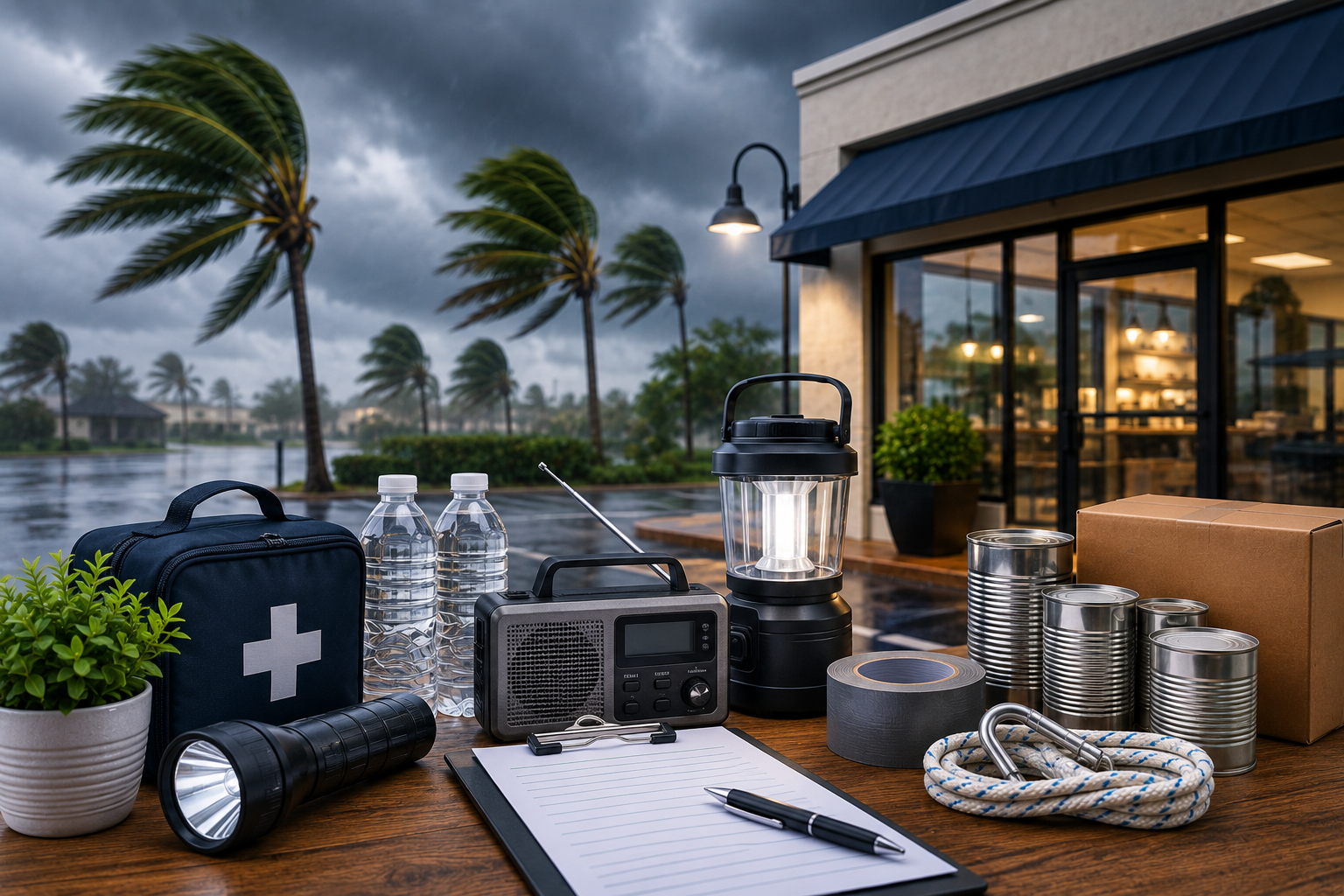
Hurricane season officially runs from June 1 through November 30, and taking it seriously is vital for the survival of your small business. In fact, statistics show that about 40% of businesses that close following a natural disaster never reopen.
The good news is that preparing today can save your business tomorrow. The Small Business Development Center (SBDC) recommends a simple, four-phase approach to disaster resilience: Identify, Plan, Implement, and Recover.
Phase 1: Identify
Start by figuring out what your business needs to survive. That means identifying your most critical functions — like processing payments, manufacturing, or communication — and the resources that keep them running. Once you know what’s essential, take an honest look at the risks that could threaten them.
Phase 2: Plan
Once you know your risks, it’s time to make a plan. Figure out how a disaster would impact your business financially and operationally, and set a Recovery Time Objective — a clear deadline for getting back up and running. Build out your emergency response and communication plans so everyone knows what to do. Put together a Records-To-Go box with your key documents and identify backup locations and suppliers before you need them.
Phase 3: Implement
A plan only works if you actually use it. The Implement phase is about putting your plan into action — training your team on their emergency roles, running simulations, and testing your procedures before a real disaster hits. It’s also about taking preventative steps now, like backing up your files to the cloud or securing your building, which can reduce damage and even lower your insurance premiums.
Phase 4: Recover
Once the storm passes, the goal is simple — get back to normal as quickly as possible. That starts with your insurance. Know what your policy covers and file your claims right away. If insurance doesn’t cover everything, there are programs that can help.
After the Storm: Finding Help and Resources
Here are several resources and assistance programs designed specifically for small businesses:
- SBA Disaster Loans: The U.S. Small Business Administration offers low-interest disaster recovery loans to help repair or replace real estate, machinery, equipment, and inventory. They also offer Economic Injury Disaster Loans (EIDL) to provide working capital to help you cover operating expenses until normal operations resume.
- Emergency Bridge Loans: These are meant to bridge the financial gap while you wait for insurance payouts or longer-term SBA loans to be approved.
On June 1 we hosted a Hurricane Preparedness Webinar. See the recap below:
youtube.com/hurricanepreparedness
Hurricane Preparedness Webinar Panel:
- South Florida Small Business Development Center SBDC
- Jesus Padilla: jpadilla@fiu.edu
- Brian Van hook: bvanhook@fiu.edu
- City of Miami Procurement
- Annie Perez : annieperez@miamigov.com
- City of Miami Emergency Management
- Chief Grant Musser: gmusser@miamigov.com
- Victoria Giraldo : VictoriaGiraldo@miamigov.com
- SBA
- Alyn Fernandez: Alyn.Fernandez@sba.gov
Additional Resources:
- Small Business Disaster Preparedness Guide
- Disaster Preparedness Plan Template
- Emergency Procedures Template